



 Teams
Teams SharePoint
 Slack
Slack QR Codes
 PDF
PDF Active Directory
 Workday
 ADP
ADP Canva
CanvaWaking up at midnight to send an email across the world
How Haleigh Brouillette helped Hudl scale internal communications across 18 countries — without staying up until midnight to do it.
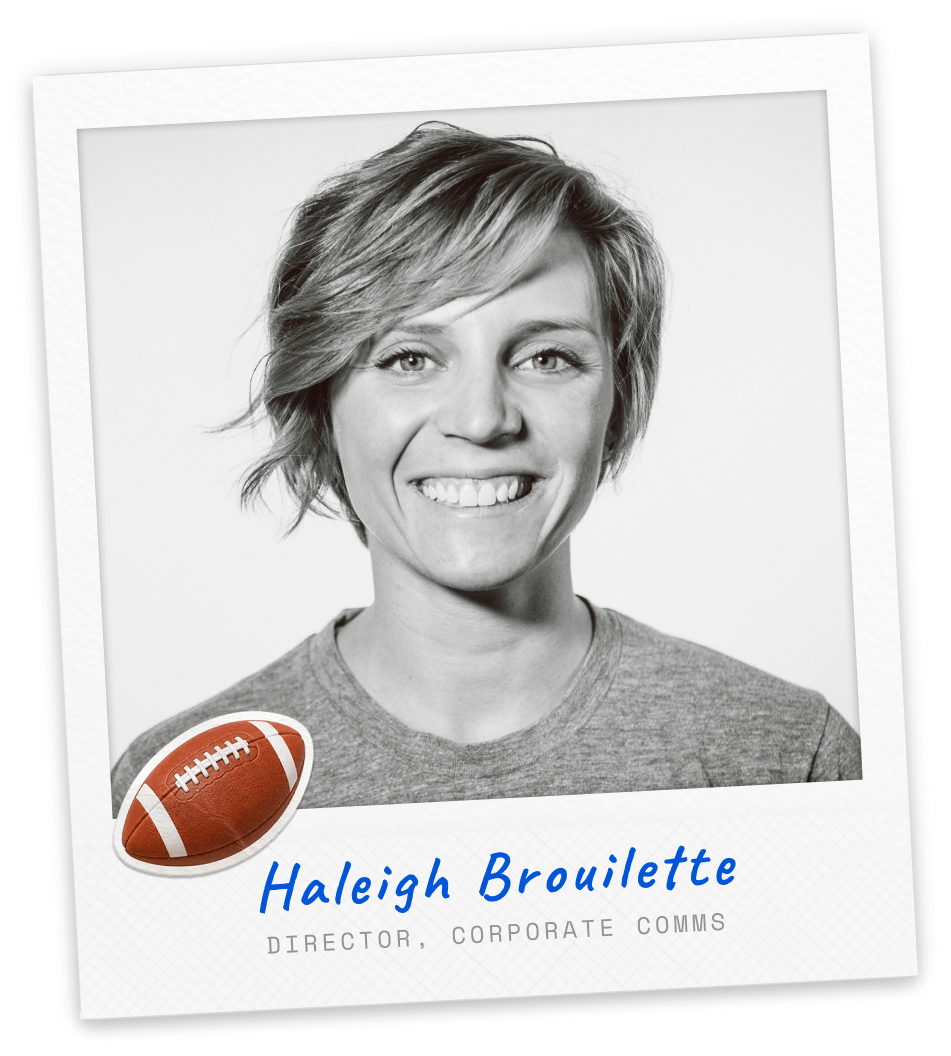
Haleigh Brouilette
Director, Corporate Communications

CHAPTER ONE · THE MIDNIGHT SEND
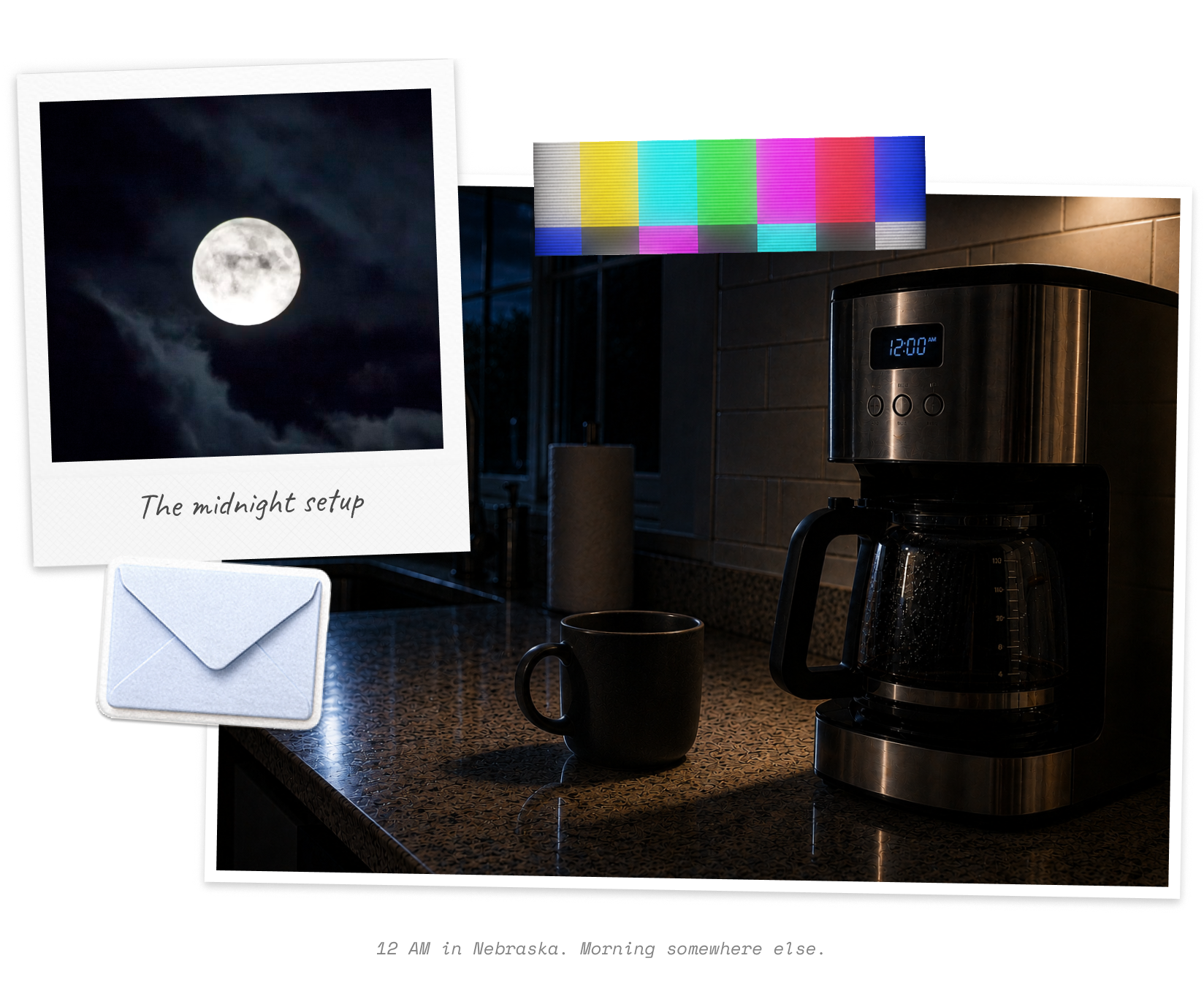
It’s midnight in Nebraska
By the time one office was calling it a day, another was just getting started.
It’s midnight in Nebraska, and while most of the company is asleep, Haleigh Brouillette is awake with her laptop because somewhere else in the world, it’s already morning. Employees are logging on, starting their day, and an important update needs to be waiting for them when they do — not a few hours later when everyone in the U.S. is awake, and not buried beneath a day’s worth of notifications, but right when they need it.
For Haleigh, moments like this used to be part of the job.
That’s the part of internal communications people rarely talk about. We spend a lot of time on the good stuff — strategy, culture, leadership visibility, employee engagement. But what doesn’t come up nearly as often is the logistics of reaching the right people at the right time, the distribution lists you’ve rebuilt four times, the time zone math you’re doing at midnight. or the “I hope this went to the right people” feeling after you hit send.
But that’s what growth looks like. More people, more places, more moving pieces — and eventually, a communication system that worked really well for hundreds of employees starts showing its limits. Suddenly, reaching the right people at the right time isn’t quite as simple as it used to be.
CHAPTER TWO · GROWING PAINS
When the company grows faster than the system holding it together
What worked for hundreds of employees became impossible for thousands spread across the globe.
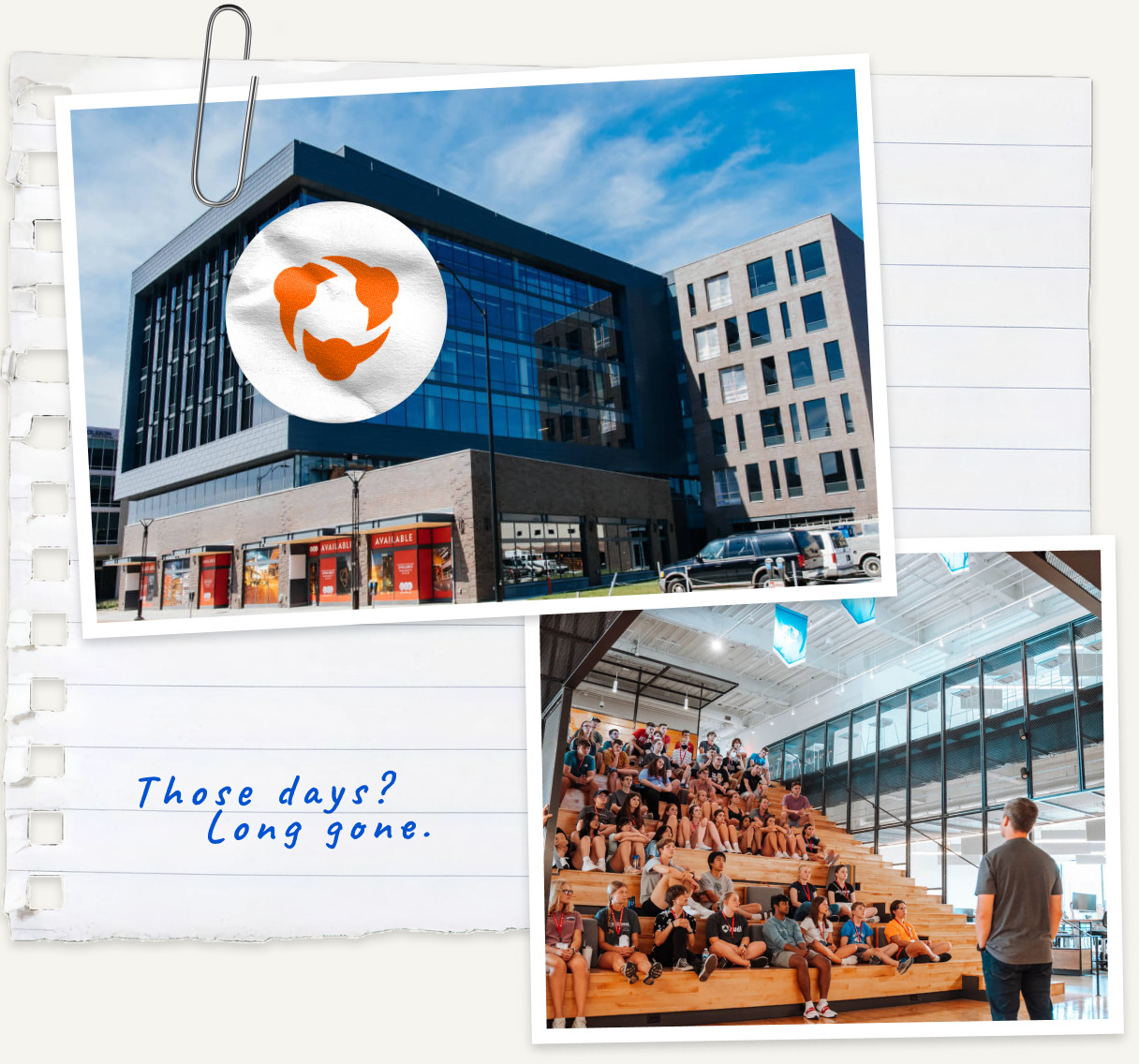
That’s exactly what was unfolding at Hudl. Over the last several years, the sports technology company had grown from its Nebraska roots into a global organization with more than 3,000 employees across 18 countries. As Director, Corporate Communications, Haleigh and her small-but-mighty team were responsible for helping all employees to stay informed, connected, and feeling like one company despite the distance.
She calls a lot of it “heartbeat comms.”
"The things that are always happening — all-hands, event announcements, coordination. We also share information to help everyone do their jobs well, like our rolling five-year product roadmap."
— Haleigh, Director, Corporate Communications
It’s the perfect way to describe it. Companies aren’t held together by one big announcement — they’re held together by the steady rhythm employees rely on every day. And that rhythm gets a lot harder to maintain as more offices open, more teams come online, and your workforce stretches across continents.
The messages themselves weren’t the hard part. The challenge was everything that happened after they were written — getting them to the right people, at the right time, in a way the team could actually trust. As Hudl continued to grow, the communication process started feeling less like a system and more like a series of handoffs, each one depending on the next.



“”Workshop is the hill I will die on. You could take it out of my salary for all I care.””
— Haleigh, Director, Corporate Communications
CHAPTER THREE · THE OLD WAY
A whole production. Every single time.
Communicating across teams, locations, and time zones meant relying on spreadsheets, distribution lists, and crossed fingers.
For a while, Haleigh and her team made it work with what they had. Every send became a series of handoffs. An email started as a Google Doc, made its way to marketing to rebuild in Marketo, which came back as a test for review, to pick up another round of edits, and eventually land in Outlook to be sent. By then, all that was left to do was choose a distribution list, hit send, and hope everything landed where it was supposed to.
"Back in the day we were just sending emails through Outlook. We were shooting things out like, 'I hope people read this, because I don't really know.'"
— Haleigh, Director, Corporate Communications
That “I don’t really know” feeling probably sounds familiar to a lot of internal communicators. You can spend hours getting the message exactly right, but once it’s out the door, you’re left wondering. Did it reach the right people? Did anyone actually open it? Was the distribution list even up to date? The work was thoughtful. The uncertainty came after the send.
When the team wanted an email that actually looked and felt like Hudl, the process got even longer.
“Marketing had Marketo, but couldn’t share it with internal comms. So we would send them a document that had everything we needed in the email, and then they would put it in the other software and send us a test email. It was a really long back and forth.”
Looking back, it’s easy to see how much of the job was spent managing the process instead of the communication itself.
From this …




From hope and send to send-and-know.
BEFORE · THE OLD WAY
- 01 Write Email
- 02 Google Doc
- 03 Marketing review
- 04 Send via Outlook
- 05 Hope

AFTER · WITH WORKSHOP
- 01 Draft in Workshop
- 02 Pick audience
- 03 Schedule by time zone
- 04 Send
- 05 See who opened
Same job. Same care. A very different relationship to the send button.
… to this.
The emails didn’t become any less important. Haleigh and her team simply had a process that could finally keep up with the company they were becoming.
“We’re a big, grown-up company now, so we needed our software to grow up too. We needed something to scale with us and track what we’re doing.”
CHAPTER FOUR · THE PAYOFF
It finally felt like us.
For the first time, Hudl's internal emails finally felt like Hudl.
The first sign that something had changed wasn’t a report or an analytics dashboard. It was the replies.
"The first email we sent, we got a lot of, 'Is this spam?' — People didn't believe it was actually an internal email, because it looked like something a legitimate company would send."
— Haleigh, Director, Corporate Communications
It’s a funny story now, and at the time it was the best compliment they could have gotten. For the first time, Hudl’s internal emails actually looked and felt like Hudl. Employees were getting the same polished, on-brand experience they’d come to expect everywhere else.
“Now I can have headers and dividers and all sorts of different things. It’s more in line with what the rest of our brand team is doing, and our internal voice matches our external voice — employees are getting the same experience that our customers are getting. It’s pretty cool.”
And little by little, the rest of the job got easier, too. The right people started getting the right messages. Employees outside the U.S. stopped receiving open enrollment reminders that had nothing to do with them. Haleigh wasn’t sitting up late trying to figure out when to hit send so someone halfway across the world would see an email at the right time.
She could just … schedule it.
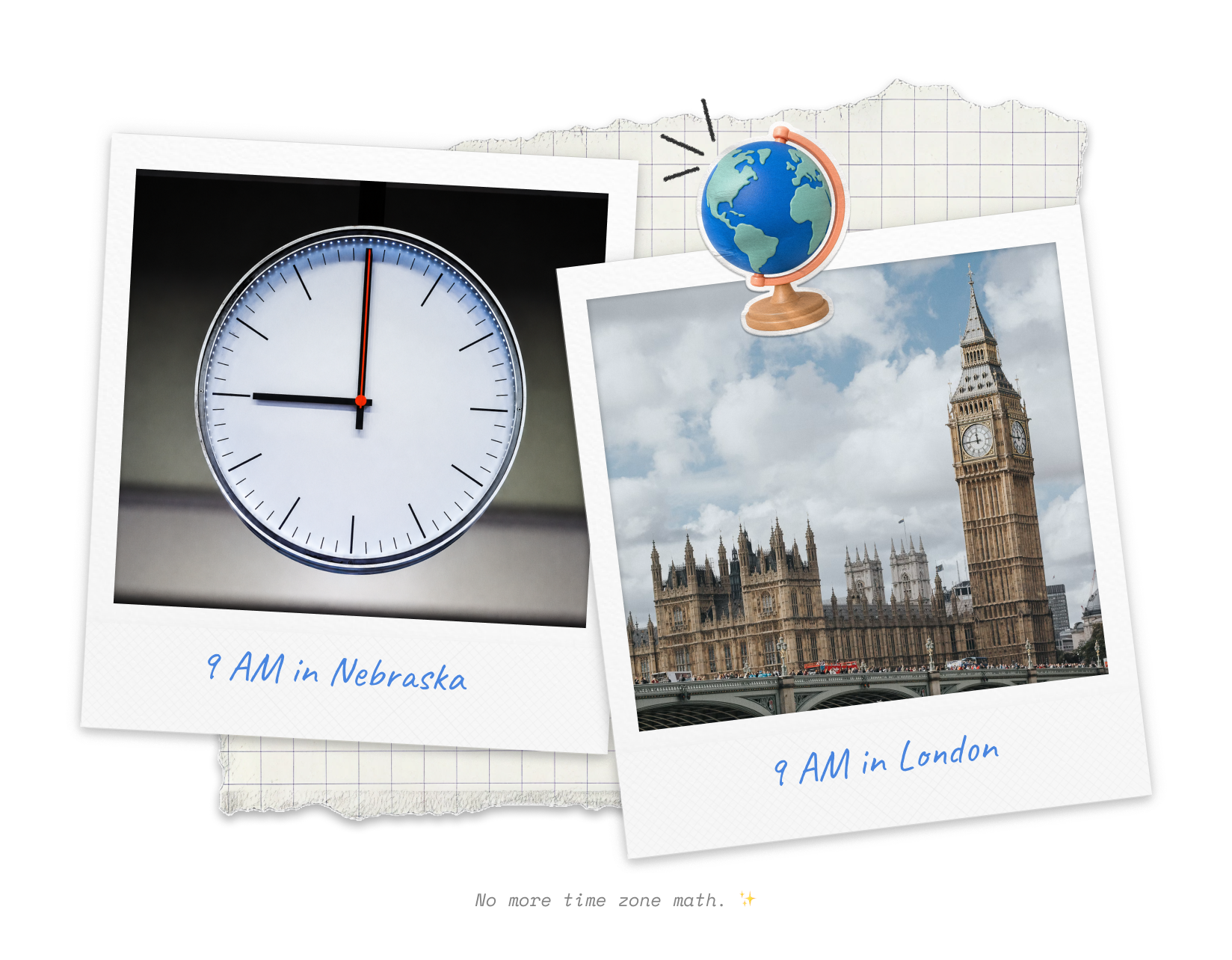
Whether someone was starting their morning in Nebraska, London, or somewhere in between, the right message was waiting for them.
“Our IT team has everybody separated out into the groups that they need — based on team, location, tenure, anything. I don’t know how it works, but it just beep boops in Workshop. It’s magic.”
CHAPTER FIVE · THE RIPPLE
Turns out, great comms are contagious.
Operations. People Ops. Sales. Workplace. One by one, teams wanted “in.”.
The funny thing about good internal communications is that you don’t usually have to tell people it’s working.
They notice. That’s exactly what happened at Hudl. What started with the communications team didn’t stay there for long.
First it was Operations. Then came the People Operations team. Then Workplace. Then Sales.
One by one, the same question kept coming up.
"People keep asking us to add them to Workshop!
Haleigh share, “We started with our comms team and then it expanded to our operations team, workplace ops team, people operations, and now the sales team is sending their own weekly newsletter too. We get asked probably once a month, ‘Do you think Workshop could be used for this?'”
The best part is that none of it was forced. One team found a better way to communicate, and the others naturally wanted to be part of it.
CHAPTER SIX · THE PROOF
Monday mornings look a little different now.
For the first time, Haleigh could show exactly how far every message reached.
Every Monday morning starts the same way: coffee, analytics, and a quick look at what resonated with people last week. Instead of wondering whether a message landed, Haleigh and her team know what’s working, where people are engaging, and what they’ll do differently next time. Every campaign makes the next one a little smarter.
For the first time, the work didn’t end when she clicked send. Instead of hoping an important update landed, she could see who opened it, what people clicked on, and which messages resonated most. Every campaign made the next one a little smarter, giving her team the confidence to keep improving instead of guessing.
"Now we can send an email and say, actually, 92% of people opened it. We feel pretty good about the reach. It's taking work off our plate, and it's also so validating."
— Haleigh, Director, Corporate Communications
That’s the part of internal communications that often goes unseen. So much of the work happens behind the scenes, and for years, Haleigh and her team had to trust that their messages were reaching the people who needed them. Now they don’t have to wonder. They can see the impact, learn from it, and spend less time thinking about whether an email worked — and more time thinking about how to make the next one even better.

CHAPTER SEVEN · HAPPIER MONDAYS
"The hill I will die on."
Doing work you love is pretty great. Enjoying every part of it? Even better. 💛
The best part wasn’t prettier emails or better analytics. It was getting back to the work Haleigh loves most: helping people feel informed, connected, and part of the same team, no matter where in the world they’re starting their day.
Maybe that’s why Haleigh puts it so simply: “Workshop is the hill I will die on. You could take it out of my salary for all I care.”
When your tools get out of the way, you get to focus on what really matters: your people.
