




 Teams
Teams SharePoint
 Slack
Slack QR Codes
 PDF
PDF Active Directory
 Workday
 ADP
ADP Canva
Canva“We earn it with every text message.”
How Nick Stauffer and the team at MacLean-Fogg are finding more thoughtful ways to reach 2,400 employees across shifts, facilities, languages, and screens of every kind.
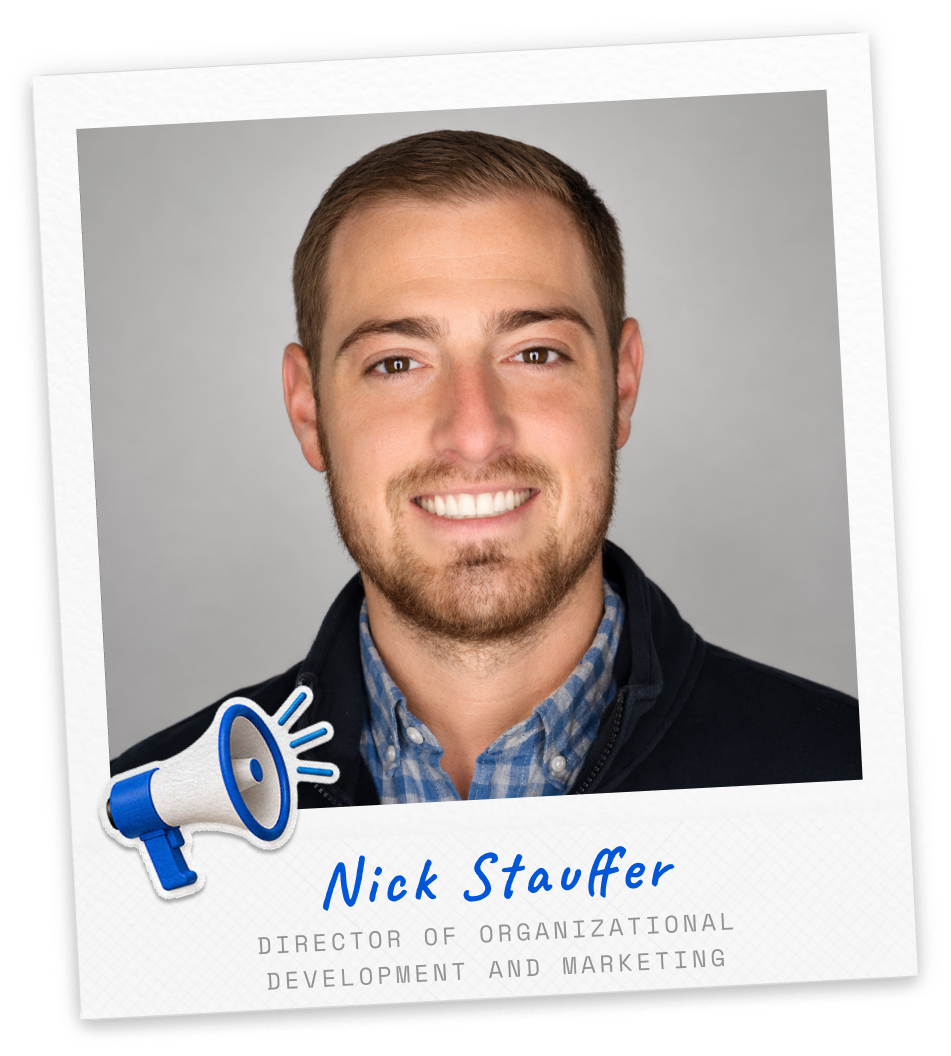
Nick Stauffer
MacLean-Fogg has spent 100 years making the parts that keep the world moving.
CHAPTER ONE · THE REALITY CHECK
There’s nothing quite like an oily, 10-year-old bulletin board
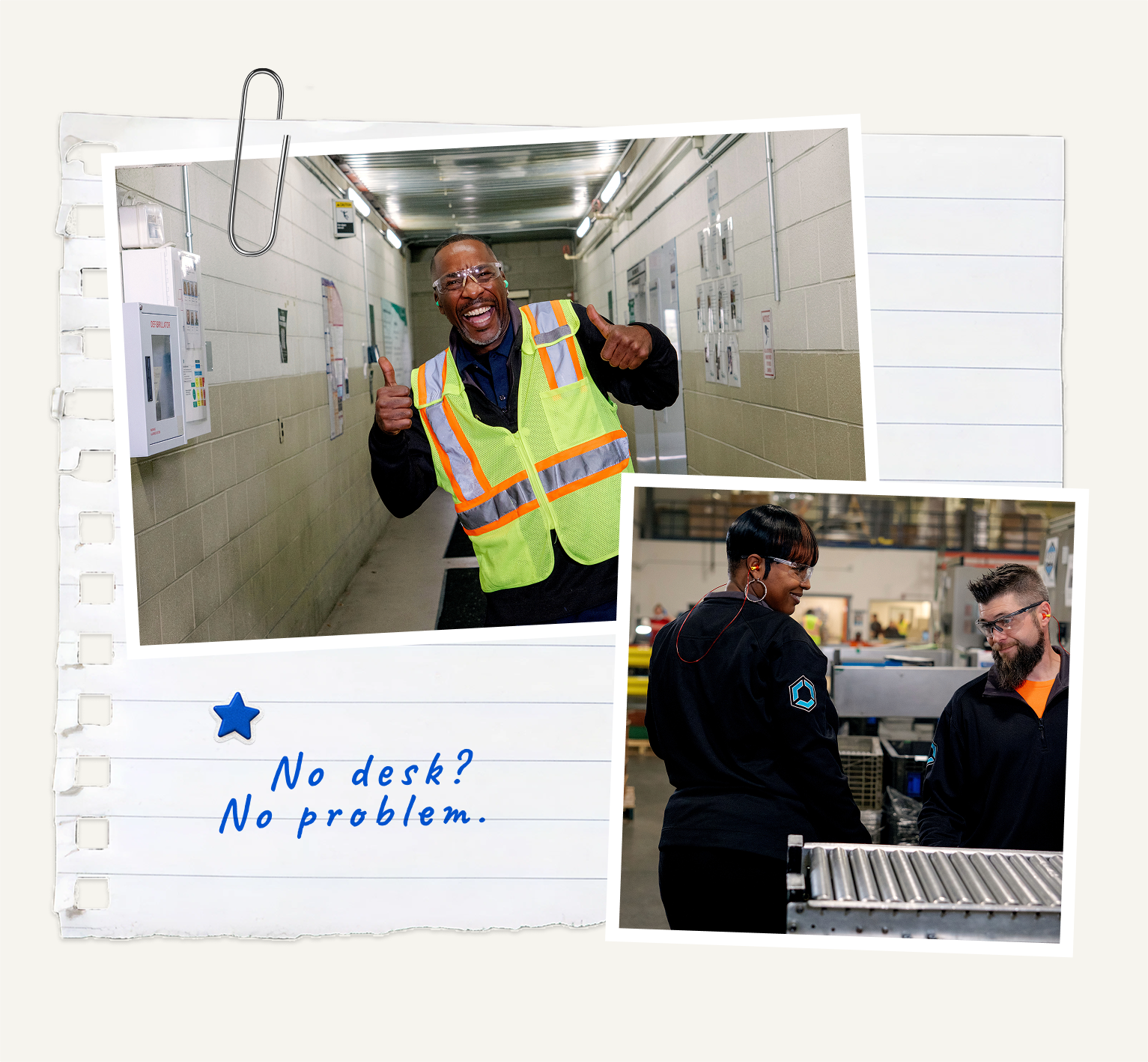
For Nick and his team, rethinking frontline communications started by taking a good look at what employees were actually experiencing.
MacLean-Fogg has been around for more than a century. The family-owned manufacturer is now led by its fourth-generation CEO, with roughly 2,400 employees working across about 25 facilities in the United States. When Nick Stauffer, Director of Organizational Development & Marketing, joined MacLean-Fogg and began looking more closely at employee communications, it became clear that this was another area ready to evolve with the company.
About two-thirds of MacLean-Fogg employees are frontline, many working across second and third shifts and communicating in English, Spanish, and Arabic. Historically, though, the communication experience was built largely around employees with regular access to a desk and inbox. And the feedback reflected that; engagement surveys consistently shwoed that employees wanted communication to improve.
So they started looking at communication from the other side: What is it actually like to receive all of this as an employee on the floor?
Sometimes the answer was hanging right in front of them.
Nick remembers bulletin boards with printed communications that had been there for years, faded and dingy and covered in the kind of oil you’d expect after enough time in a manufacturing facility. Looking at them, he remembers thinking, “It looks like we don’t care.”
MacLean-Fogg still uses print when print makes sense, but the bulletin boards helped crystallize something much bigger for the team. Every communication touchpoint contributes to the employee experience, whether that’s a flyer on the wall, a text on someone’s personal phone, or a conversation with a manager. Nick and his team wanted each of those moments to feel like someone had actually thought about the person receiving it.
CHAPTER TWO · THE ATTENTION
The message is important. Their job is important, too.
When most of your employees aren’t sitting in front of an inbox, “we sent it” only gets you so far.
Across MacLean-Fogg’s facilities, employees are doing highly skilled work throughout all hours of the day. Nick knows employees have plenty competing for their attention throughout the day, and a company message doesn’t automatically earn it just because it lands in their inbox.
“I can’t fault them for it,” Nick said. “I just have to be a little bit more creative, and I have to earn their time through whatever mechanism I’m leveraging.”
That idea of earning their time has shaped the way Nick and his team think about almost everything that comes next. Rather than asking one channel to reach everyone, they’ve become much more intentional about what each channel is actually good at. Nick describes email, SMS, digital signage, Pages, and managers as different “doorways into our employees,” each giving people a different entry into the information they need.
"Email gives them room for the details. SMS and digital signage can get someone’s attention when timing matters. Landing pages give employees somewhere to go for the full story, and managers bring context to the conversations that inevitably happen next."
— Nick, Director of Organizational Development and Marketing
A digital sign doesn’t need a paragraph when a QR code can point them somewhere useful. A text about open enrollment doesn’t need every benefits detail when it can lead someone to Dayforce, where employees are already going for time, pay, and benefits. The team uses short links, QR codes, signage, email, SMS and, according to Nick, potentially “carrier pigeons” if that’s what gets someone where they need to go. 😅



“We earn it with every text message.”
— Nick Stuaffer, Director of Organizational Development and Marketing
CHAPTER THREE · THE TEXT
A text should be worth the buzz.
Getting access to someone’s phone is one thing. Staying welcome there is another.
MacLean-Fogg had used SMS before through an emergency notification platform that was expensive and, as Nick and his team eventually discovered, barely being used. But the bigger lesson wasn’t how few texts they were sending. It was what happened when messages that weren’t really emergencies started finding their way into an emergency channel.
Employees noticed, some opted out, and suddenly MacLean-Fogg risked losing one of its most useful ways to reach someone when something genuinely important happened. That experience changed the way Nick thought about having a direct line to an employee’s phone.
“We earn it with every text message.”
Today, his team uses two dedicated numbers in Workshop, with one reserved for safety and emergency communications and another for general announcements. Employees learn what to expect from each during onboarding, and the team is thoughtful about what actually deserves that little buzz in someone’s pocket, whether it’s a safety alert, weather update, urgent schedule change, benefits deadline, or something else where timing really matters.
Nick also pays just as much attention to what comes back. He reads employee SMS responses in Workshop, an experience he describes as “humbling”, but incredibly valuable. When someone opts out or says a message missed the mark, the team uses that feedback to improve the next one.
It’s a small distinction, but an important one. For Nick and his team, SMS isn’t valuable simply because it can reach someone quickly, it’s valuable because employees trust that when MacLean-Fogg uses it, there’s a good reason.
CHAPTER FOUR · THE REPLY
Reply: A for barbecue. B for pizza.
The text still gets the message across. It just gives employees a reason to talk back.
For a long time, Nick says SMS felt more like a megaphone. When the company had something to say, they’d send it, employees received it, and that was the end of the interaction.
So Nick’s team started experimenting with something more interesting, they started asking instead of just telling.
- A town hall reminder might invite employees to text in questions for leadership.
- A company picnic announcement might share the important details, then ask everyone to weigh in: reply (A) for barbecue, or (B) for pizza.
The message still does its job, but now employees have a reason to participate.
That same thinking has started showing up elsewhere, including digital signage. Employees can see recognition, local updates, and continuous improvement ideas, while initiatives like Go Green for Safety invite people to scan a QR code, submit a photo, and then watch as familiar faces begin appearing on screens around the company.
Nick has seen how naturally that draws people in. Someone recognizes a coworker, another employee spots their own photo, and suddenly there’s a reason to stop and see what else is there.
For a team constantly thinking about how to earn attention, that’s a pretty good outcome: give employees a chance to see themselves in the communication, and they might actually want to be part of it.
CHAPTER FIVE · THE REAL PEOPLE
A jeans-in-the-office company doesn’t need suit-and-tie comms
It took Nick “a hot minute” to learn that polished and effective aren’t always the same thing.
Nick came to MacLean-Fogg from environments where videos were highly produced, emails were carefully manicured, and getting communication right could sometimes mean polishing every last edge.
Then he got to know MacLean-Fogg.
We’re very much a jeans-in-the-office [company]… so why would we have a suit-like kind of appearance when it comes to our emails and text messaging? It seemed inauthentic.
— Nick, Director of Organizational Development and Marketing
That realization changed the way Nick and his team approached the work. A useful employee communication didn’t necessarily need a production crew; sometimes a Loom video or an iPhone was enough, especially when the person on camera was someone employees actually knew.
When the team needed to communicate benefits information, for example, they helped their benefits manager record a short video herself. Employees could see a familiar face explaining the information directly, and translated versions helped make that same message useful to more of the workforce.
They’re even comfortable acknowledging when the employee experience itself is imperfect. If there’s a weird button someone needs to click, Nick would rather say “this part’s kind of annoying” and show them exactly what to do than pretend the process is seamless.
It’s communication that feels a little less like it came from corporate and a little more like it came from the people you actually work with, which, for Nick and his team, is exactly the point.
CHAPTER SIX · THE PEOPLE BEHIND IT
The best communication channel might be a person
Behind the texts, screens, QR codes, and emails is a network of people who already know their teams.
For all the technology Nick and his team have introduced, he keeps coming back to one of their most important communication channels: managers.
Employees naturally turn to the person leading their team when something doesn’t make sense, but historically those managers might have received the same information at essentially the same time as everyone else. Telling someone to “ask your manager” isn’t particularly helpful when the manager is standing there thinking, I was hoping somebody would explain this to me, too.
Because Nick’s role also includes leadership development, his team has an opportunity to build better communication directly into the way MacLean-Fogg supports its leaders. They meet quarterly with plant leaders to understand what matters locally and where the team can help, whether that’s communicating around a customer, a quality priority, or something happening specifically at that facility.
That partnership goes both ways. The more Nick and his team help local leaders communicate what they care about, the more those leaders see Internal Communications as a partner in accomplishing their goals rather than simply another corporate team asking them to pass something along.
Nick has equally practical advice for another relationship every communicator should probably invest in:
“Become best friends with your HRIS manager.”
– Nick, Director of Organizational Development and Marketing
MacLean-Fogg syncs attributes into Workshop like benefits enrollment status, bonus eligibility, promotions, and leadership information, allowing the team to be much more thoughtful about who actually needs a message. Already completed open enrollment? No reason to keep reminding you. Still need to finish? Now the reminder is actually useful.
It’s the technology doing something Nick and his team care deeply about: asking for someone’s attention only when there’s a good reason.
CHAPTER SIX · THE WORK CONTINUES
“Caffeine.”
Turns out, there is a secret to keeping all of this going.
One of the most refreshing things about talking with Nick is how little interest he has in pretending MacLean-Fogg has cracked some magical frontline communications code. He’ll happily tell you he’d be a “total liar” if he claimed they had everything figured out.
What Nick and his team have figured out is how to keep learning.
They try something and walk onto the floor to ask employees what they know. They read the SMS responses, even when those responses are humbling, listen to plant leaders about what matters locally, and pay attention when employees tell them something isn’t working. Then they try again.
They’re also making the work bigger than one central team by giving local teams templates, resources, and access to communicate more effectively themselves. And when Nick was asked how they manage to keep all of that moving, he offered perhaps the most sophisticated organizational development strategy of the entire conversation:
“Caffeine.”
For a family-owned manufacturer that has spent more than a century evolving, there’s something fitting about that willingness to keep experimenting. The technology will change, the channels will change, and there will always be another idea worth trying, but Nick’s favorite way to find out whether communication is actually working remains refreshingly low-tech: go out to the floor and ask people what they know.
That might be our favorite thing about the work Nick and his team are doing. Behind the texts, QR codes, digital signage, employee data, videos, managers, and hypothetical carrier pigeons, is a genuine curiosity about the people receiving all of it. What do they need? When do they need it? What will actually help? What deserves their attention? And what can the team learn from them next?
MacLean-Fogg has spent more than 100 years finding ways to evolve, and Nick and his team are carrying that same spirit into the way employees stay informed and connected today.
They’re not just finding more ways to reach people, they’re giving people more reasons to listen.
