

 Teams
Teams SharePoint
 Slack
Slack QR Codes
 PDF
PDF Active Directory
 Workday
 ADP
ADP Canva
CanvaEmployee Engagement | Employee Newsletter
Why we send new hire newsletters (and why your team should too!)


For any size company, it’s really… really easy to focus on what’s next. Deploying a new feature, hiring another team member, improving a process. It can feel like a constant cycle of one thing after the other. Which, in all fairness, can be good, but what about the experience your employees (especially new hires) are having in this very moment? What does the first few days or weeks of their onboarding process actually look like?
We believe that those experiences matter just as much as the growth. And honestly, they often shape how long someone sticks around to grow with you.
Tl;dr: How we welcome new hires says a lot about what we value.
That’s exactly why we started doing new hire newsletters. They’re more than a quick “Hey, welcome so-and-so!” Slack message or a shoutout in a meeting. These newsletters are personal introductions, shared with the entire company, written by the new hire themselves! Over time, they’ve become one of the most consistent and meaningful parts of our onboarding process.
So, what is a new hire newsletter?
Well, exactly what it sounds like: an internally-distributed newsletter written by… you guessed it, the new hire! But on top of being a personalized introduction, it’s also an opportunity for new hires to use our email-first platform and get in front of the entire company, but more on that later!
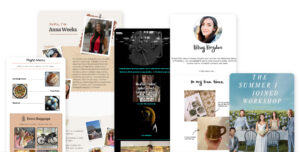
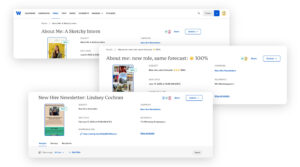
Every new hire gets a blank canvas (or they can pull a bit of inspiration from our template gallery) and complete autonomy to shape how they design their newsletter. They might include past job experiences, fun facts, travel stories, photos of family or pets, or why they decided to join Workshop.
Over the years, we’ve seen a whole lot of newsletters.
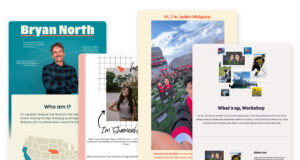
Some new hires really lean into design or catchy subject lines, others put all our features to the test, and some build out quick “get to know me” quizzes. Seeing how creative they can be (regardless of what team they’re on!) is one of the best parts of the entire process.
What makes them work
We’ve tested, tweaked, and tried again. But after a few years of doing new hire newsletters, we’ve found a handful of things that just… work. They make intros feel more human, more fun, and way less awkward — for the new hire and everyone reading along.
Remember, these aren’t hard rules, just friendly guideposts! Tweak to match your company and new hire class.
Encourage new hires to lead with you they are (not what they’ll do!)
Offer light prompts and encourage new hires to focus on themselves, not their role. This could be personal interests, quirks, backstory, what they’re into right now… you know, the good stuff. Job details will inevitably surface elsewhere; this moment is about the human behind the title.
Less tell, more show
Photos, short videos, GIFs — anything that helps the newsletter feel a little more them. New hires can drop in a few snapshots from their camera roll, pull a favorite design straight from Canva, or pair a quick blurb with a well-timed GIF. Some go big. Others keep it simple. Either way, visuals help their personality shine and make the message stick.
Keep it light and time-bound
No one needs a memoir, so we tell new hires to aim for about five to eight minutes of content. Each newsletter is scheduled to land in every employee’s inbox 30 minutes before All Hands. Then, during All Hands, the new hire presents it live (whether remote or in person!) — so the async email turns into a shared moment.
“Wait… but what if I am not good at design?”
We hear this a lot! And we tell new hires the same thing we tell our customers: you don’t need to be a design pro to create something great. Again, with the template gallery, the option to clone past emails, and easy access to previous new hire intros in Campaigns, there’s no shortage of inspiration.
And really, this isn’t a skills test. A simple layout still gets the message across. The goal is just to get every new hire into the platform early — especially since, depending on their role, they might not get much hands-on time with Workshop otherwise.
It’s more than a message — it becomes a moment
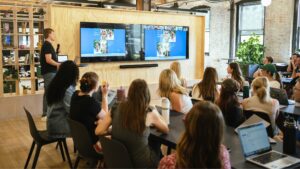
With a new hire class starting each month, we carve out a few minutes in our weekly All Hands to spotlight team intros — usually three or four at a time. Each person scrolls through their welcome email in front of the company (everyone’s already seen it in their inbox, but this gives it a little stage time).
It’s quick and informal, and it helps turn an async moment into a shared one.
The impact is easy to see: Slack fills up with welcome messages. Coffee invites get sent. People swap stories over shared interests or past roles. It smooths the jump from “I just joined” to “I feel like part of the team.”
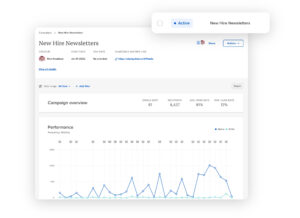
And the newsletters themselves? People read them. Like, really read them. On average, new hire newsletters get a 91% open rate. That’s about as close as you can get to a guaranteed read in internal comms.
Why we keep doing it
We’re still a small team — but we’re growing. And that growth makes it even more important to create intentional moments of connection. Without them, it’s easy to drift into silos or miss the chance to really see each other.
The new hire newsletter helps prevent that. It’s a small gesture that sends a clear message: we’re not just adding headcount. We’re building relationships.
Want to start your own new hire newsletter? Try this:
Make it part of onboarding.
Add it to the first-week checklist, right alongside account setup and team intros.
Keep the structure simple.
Offer a few prompts, then let the new hire take it from there. It doesn’t need to be polished — just personal.
Let them own it.
Writing, designing, sending — the whole thing. It’s a small but meaningful way to set the tone for internal comms.
Share it out loud.
Showcase it at your next All Hands (or whatever your version is). That way, the whole team sees it, not just the inbox crowd.
Celebrate the variety.
Some will be detailed. Others will be short and sweet. That’s kind of the magic — everyone gets to show up in their own way.